Skip to content
Shehjar Sadhu, PhD, Electrical Engineering

Shehjar Sadhu

PhD · Electrical Engineering

Wearable digital health research.

I am a wearable digital health research scientist. I design end-to-end mHealth and Internet of Medical Things AI platforms for large-scale clinical studies, quantifying symptoms of Parkinson's disease and ADHD.

01 — Cardiac signal

Continuous cardiac monitoring.

Arm-worn electrocardiography acquired over multi-hour sessions and synchronised through a serverless cloud pipeline. Pan–Tompkins detection yields R-peaks, and the resulting RR intervals support heart-rate variability analysis.

  • Minder · NIH R01 · UMass Chan Medical School
  • arm-ECG, EDA and PPG acquisition
  • Best Demo Award, IEEE BSN 2025
02 — Optical pulse

Wrist-based physiological sensing.

Consumer smartwatches provide continuous heart-rate data at low participant burden. The research contribution lies in establishing which segments meet the quality threshold required for downstream inference.

  • CareWear · 27 participants
  • Trier Social Stress Test protocol
  • Over 16 GB of physiological data
03 — Inertial motion

Motion as a behavioural marker.

Twenty children observed across structured and unstructured school-like activities, with approximately sixteen hours of video annotated by seven trained raters. Power-spectral-density features outperformed time-domain features, consistent with the repetitive character of fidgeting behaviour.

  • FidgetSense · Galaxy Watch 4 at 30 Hz
  • 83.97% balanced accuracy · 0.92 ROC AUC
  • ADHD vs. neurotypical, p = 0.0033
04 — Interaction data

Interaction data as a digital biomarker.

Within a browser-based puzzle platform, cursor dynamics demonstrated greater stability than the concurrently recorded wearable stream — a finding that informed the design of subsequent data-quality controls.

  • MindGame · ACM IoT 2025, Vienna
  • 2,427 puzzle sessions recorded
  • Dataset released on Zenodo
05 — Clinical translation

From multimodal signal to clinical insight.

Seven sensing modalities across eight platforms, directed towards a single objective: reducing the distance between what a sensor records and what a clinical team can act upon.

Research Projects

Research projects.
Eight platforms deployed to human studies.

Each platform was developed under an approved IRB protocol and evaluated with participants in laboratory, clinical or in-home settings, in collaboration with clinical and industry partners.

0
Citations

Google Scholar

0
h-index

i10-index 4

0
Publications

peer-reviewed

0
Research platforms

deployed to studies

  • Wearable digital health systems

    End-to-end Internet of Medical Things platforms spanning device firmware, mobile applications, cloud infrastructure and clinician-facing interfaces.

  • Psycho-physiological signal analysis

    Processing and interpretation of ECG, PPG, electrodermal activity and inertial data for the assessment of stress, attention and motor function.

  • Applied machine learning

    Feature engineering, classical models and deep architectures for multimodal sensor fusion, with attention to validation strategy and generalisability.

  • Data quality and reliability

    Quantifying the reliability of participant-generated wearable data in remote and naturalistic settings, and designing quality controls that operate in real time.

  • User-centred clinical design

    Participatory design of analytics platforms with clinicians, so that longitudinal sensor data is presented in a form suited to clinical decision-making.

  • Clinical domains

    ADHD, Parkinson's disease, epilepsy, opioid use disorder, dementia caregiving and stress management.

Smartwatch platforms

Four builds of the
Galaxy Watch app.

Three of the studies below run on a consumer Samsung Galaxy Watch sampling at 30 Hz. Getting a commodity device to hold a rate and survive a full session was its own body of work.

  1. v0.0.0The past
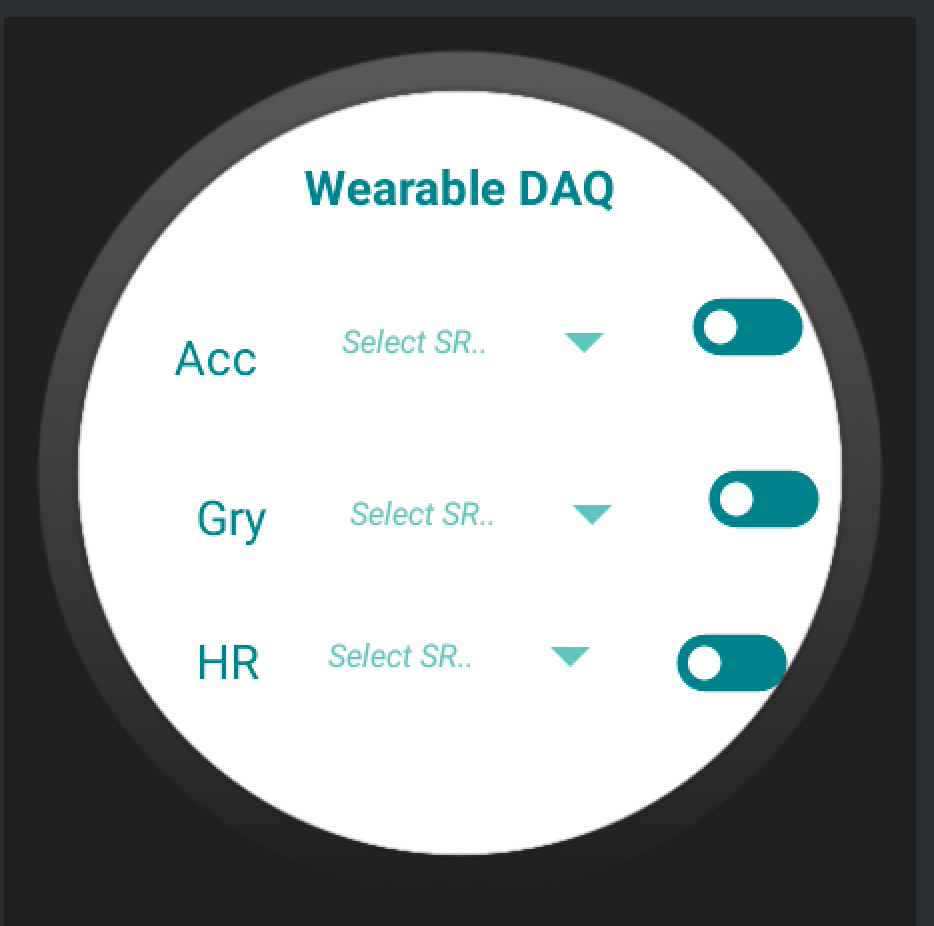
    The first Wearable DAQ watch screen: accelerometer, gyroscope and heart rate, each with a sample-rate selector and an on/off toggle.
    • Too many toggles
    • Did not support a range of sample rates
  2. v1.0.0The past
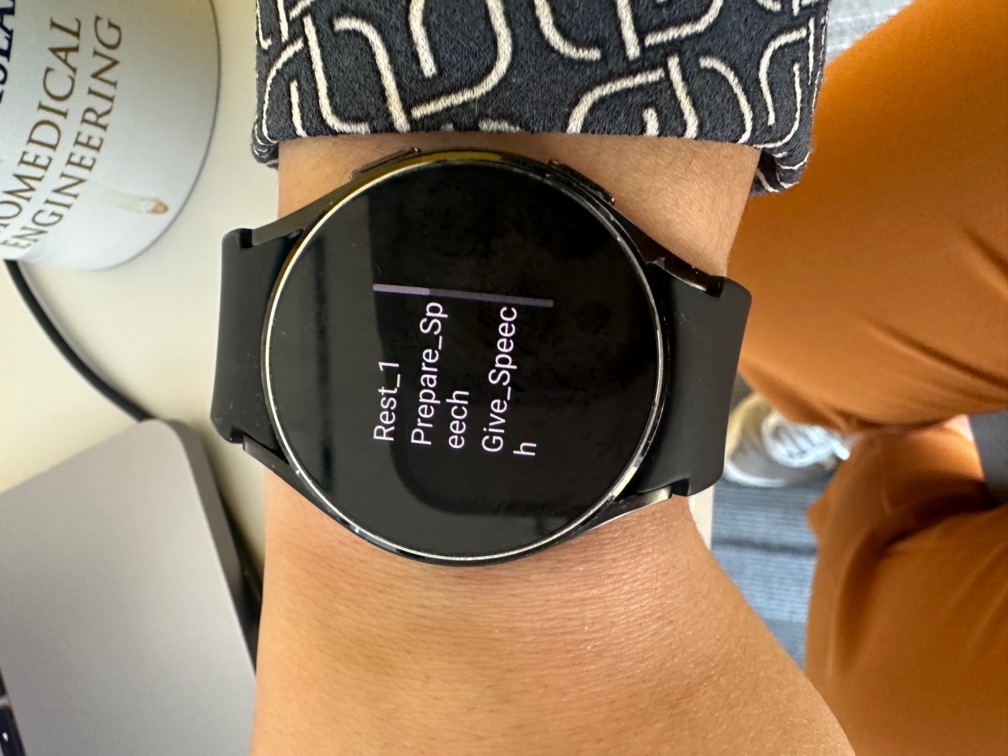
    The watch worn on the wrist, stepping through the stress-test protocol: Rest 1, Prepare Speech, Give Speech.
    • Started giving high data dropouts
    • One file saved every five minutes
    • Background timer complexities
    Used in study
  3. v2.0.0The present
    Screenshot not in the
    exported deck
    • On-board heart-rate quality checks
    • Simpler backend with a wake lock
    Used in study
  4. v3.0.0The future
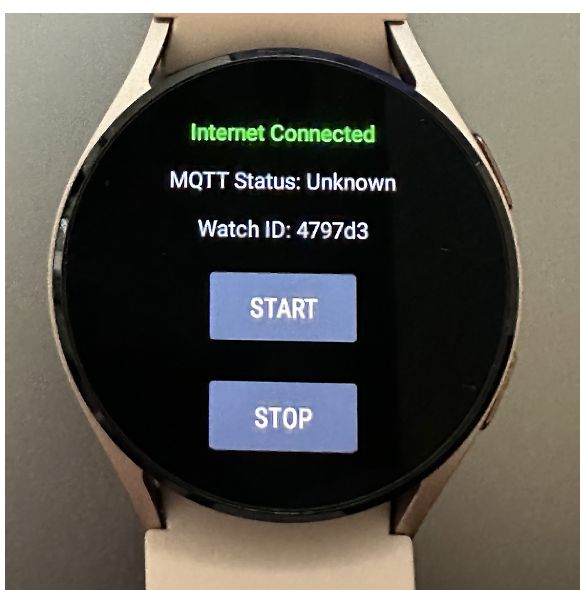
    The current watch app showing internet connection status, MQTT state and the watch identifier, with start and stop controls.
    • Publishes and subscribes over MQTT
    • Paired with the Galaxy Studio dashboard
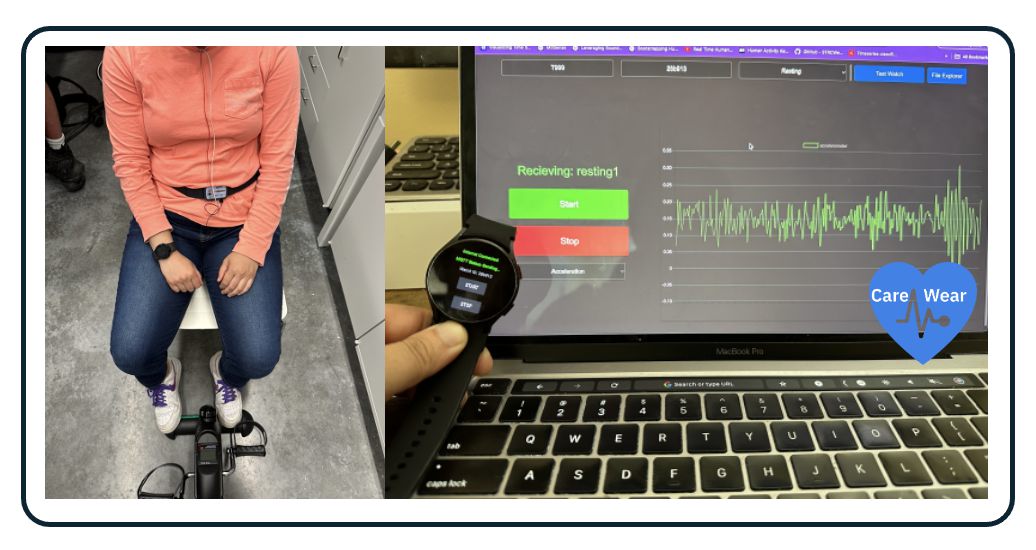
CareWear data collection session: a seated participant wearing a chest belt and smartwatch using an under-desk exercise bike, beside a laptop displaying the companion application receiving a live acceleration stream.Under preparation
2024 — present

CareWear

Multimodal stress detection platform for mental health.

Twenty-seven participants completed a Trier Social Stress Test while wearing a consumer smartwatch and a custom chest belt, with a Biopac system providing reference physiology. The processing pipeline cleans and merges more than 16 GB of data, then benchmarks classical machine-learning models against DeepFusionNet, a per-sensor CNN–LSTM architecture with attention that learns heart-rate and motion representations before fusion.

  • ECG
  • PPG
  • ACC
Participants
27 (13 M · 14 F)
Data volume
Over 16 GB
DeepFusionNet
0.67 b-acc · 0.76 F1 (ACC+HR)
Combined set
0.77 b-acc · 0.83 F1

PyTorch · Pan–Tompkins · scikit-learn · Kotlin
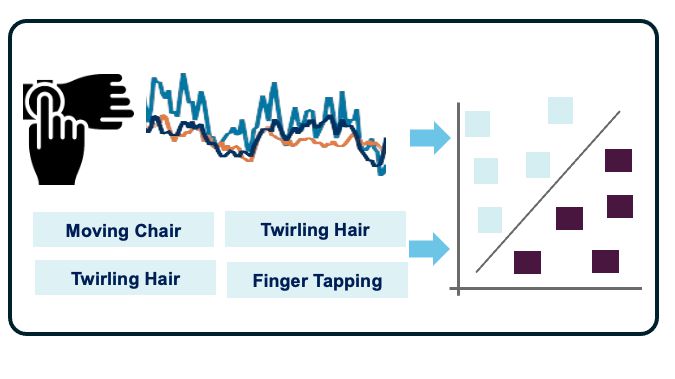
FidgetSense concept diagram: a hand icon and three overlaid tri-axial motion traces feeding labelled behaviours — moving chair, twirling hair and finger tapping — into a scatter plot separated by a decision boundary.Submitted
2025

FidgetSense

Fidgeting behaviour detection in children with ADHD.

Twenty children aged 6–11 completed school-like activities — academic worksheets, structured and unstructured magnetic-tile tasks, and free play — while wearing a Galaxy Watch 4 sampling at 30 Hz under video observation. Seven raters, blinded to diagnostic status, annotated approximately sixteen hours of recordings. Frequency-domain features provided the strongest discrimination, consistent with the rhythmic and repetitive nature of the target behaviours.

  • ACC
  • GYR
Cohort
20 children · 6 with ADHD
Annotation
~16 h video · 7 raters
Best model
Gradient Boosting · PSD features
Balanced accuracy
83.97% · AUC 0.92

Galaxy Watch 4 · scikit-learn · StratifiedGroupKFold

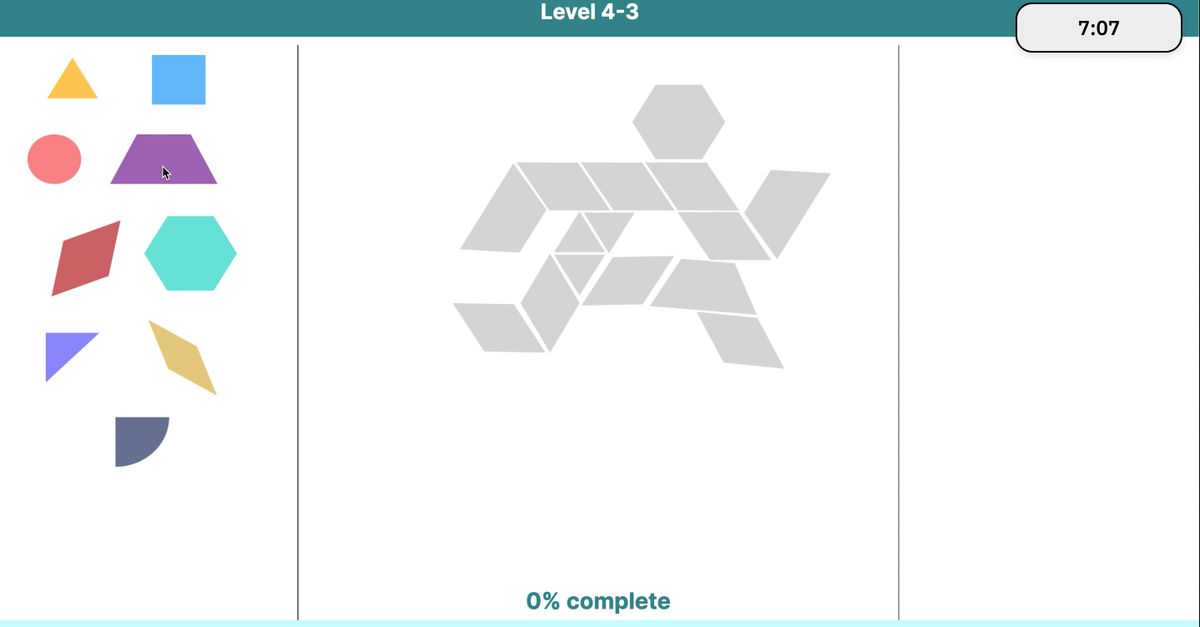
MindGame interface: a tangram puzzle level showing a palette of coloured shapes on the left, a grey target silhouette in the centre, and a countdown timer with a completion meter.Published
2024 — 2025

MindGame

Internet of Medical Things puzzle platform for ADHD behaviour analysis.

An IoMT platform pairing a browser-based tangram game with a smartwatch, capturing cursor dynamics and wearable sensor streams on a common clock. Across 2,427 puzzle sessions the study assessed whether wearable data is sufficiently reliable for remote behaviour monitoring, and established a set of data-quality metrics for in-lab versus at-home comparison.

  • MOUSE
  • ACC
  • GYR
  • PPG
  • EEG
Participants
12 (5 with ADHD)
Sessions recorded
2,427 puzzles
Venue
ACM IoT 2025, Vienna
Dataset
Public — Zenodo

Flask · Google Cloud · MQTT · Wear OS · MUSE EEG

Beyond the wrist

Armbands, e-textile gloves,
clinician dashboards and agentic AI.

Work that does not sit on the wrist: custom sensing hardware, the cloud infrastructure behind it, the interfaces clinicians read it through, and a tool that reasons about signal quality on its own.

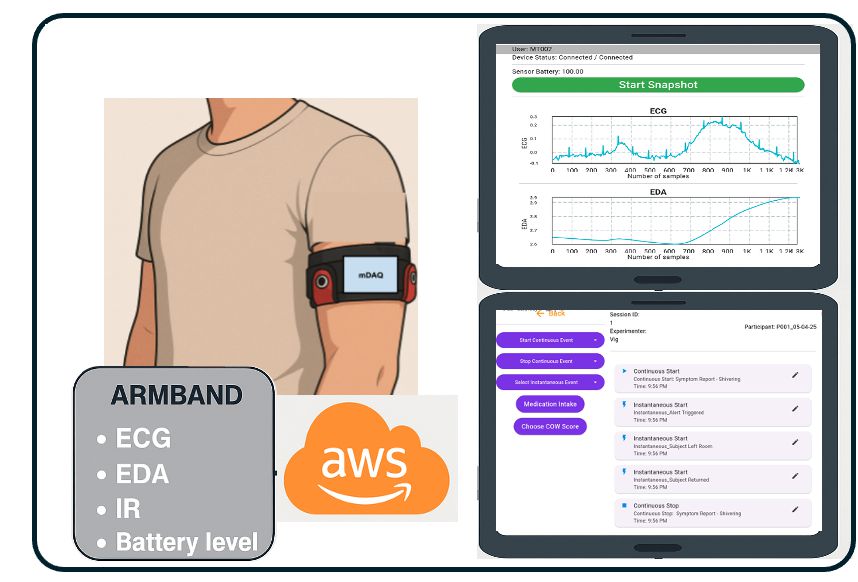
Minder system diagram: a textile armband worn on the upper arm streaming ECG, EDA, IR and battery telemetry to AWS, beside tablet screens showing live ECG and EDA plots and a timestamped event-annotation log.Ongoing
2024 — present

Minder

Cloud system for a wearable armband monitoring opioid use disorder.

A serverless extract-transform-load pipeline on AWS ingests and temporally aligns high-frequency arm-ECG, electrodermal activity and PPG from a custom textile armband across sessions exceeding six hours. A cross-platform Flutter application manages device pairing, event annotation and cloud synchronisation. The system is currently in active data collection towards a target of fifty participants.

  • ECG
  • EDA
  • PPG
Funding
NIH R01
Collaboration
UMass Chan Medical School
Recognition
Best Demo Award, IEEE BSN 2025
Session length
6+ hours continuous

AWS Lambda · Amazon S3 · Flutter · Python

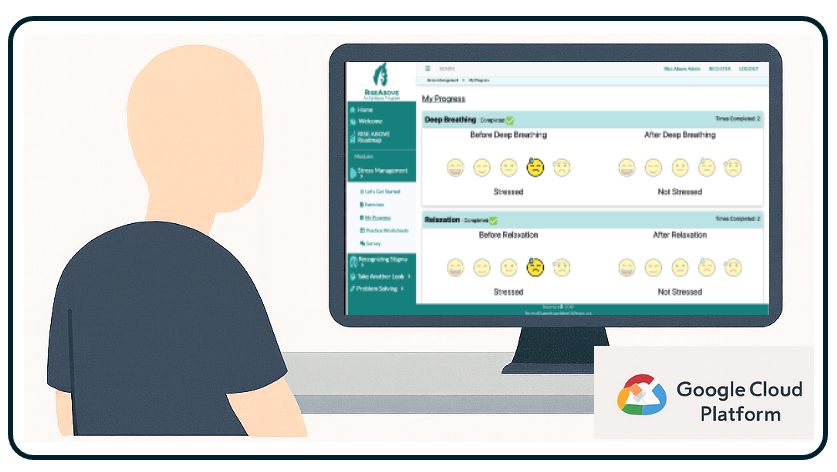
RiseAbove portal: a participant at a desktop monitor displaying the stress-management module with before-and-after mood rating scales for deep breathing and relaxation exercises.Deployed
2023 — 2025

RiseAbove

Epilepsy stigma self-management platform.

A containerised Flask application deployed on Google Cloud Platform, developed in collaboration with a neuropsychologist to deliver an online stigma-reduction programme. The deployment supported a feasibility and acceptability study and three peer-reviewed publications in Epilepsy & Behavior.

Publications
3 · Epilepsy & Behavior
Funding
Epilepsy Foundation New England
Infrastructure
GCP Cloud Run
Collaboration
Brown Health

Flask · Docker · Google Cloud Platform

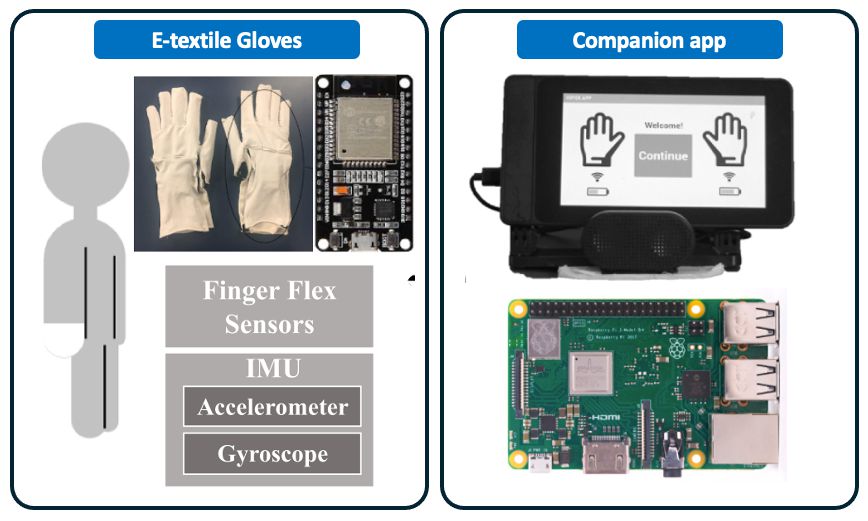
Kaya system: e-textile gloves with finger flex sensors and an ESP32 microcontroller on the left, and a tablet companion application with a Raspberry Pi on the right.Published
2022 — 2023

Kaya / iTex

E-textile glove system for Parkinson's disease tele-assessment.

Finger-flex sensors and an inertial measurement unit integrated into a textile glove, with a Raspberry Pi companion tablet guiding participants through standardised motor examinations in the home. Machine-learning models achieved approximately 90% accuracy for tremor and rigidity assessment, and a follow-up study characterised the effect of medication intake on in-home motor exam performance.

  • ACC
  • GYR
Accuracy
~90% tremor and rigidity
Funding
NSF CAREER
Venues
IEEE BSN · MDPI Sensors
Setting
In-home motor examination

ESP32 · Raspberry Pi · scikit-learn

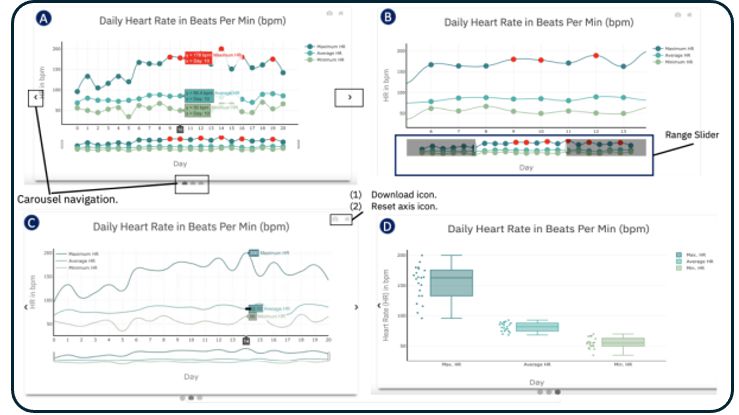
CarePortal dashboard: four variants of a daily heart-rate chart annotated with carousel navigation, a range slider, download and reset controls, and a box-plot summary view.Published
2023

CarePortal

Clinician-centred dashboard for wearable data analytics.

A wearable-data dashboard developed through participatory design with twenty-one clinician interviews, forming the basis of my master's thesis. Each interface affordance — carousel navigation, range selection, axis reset and export — was derived from documented clinician workflow requirements rather than assumed need.

  • PPG
Method
21 clinician interviews
Journal
JMIR Formative Research
Setting
Hospital emergency department
Funding
NIH R01

Plotly · Flask · Participatory design

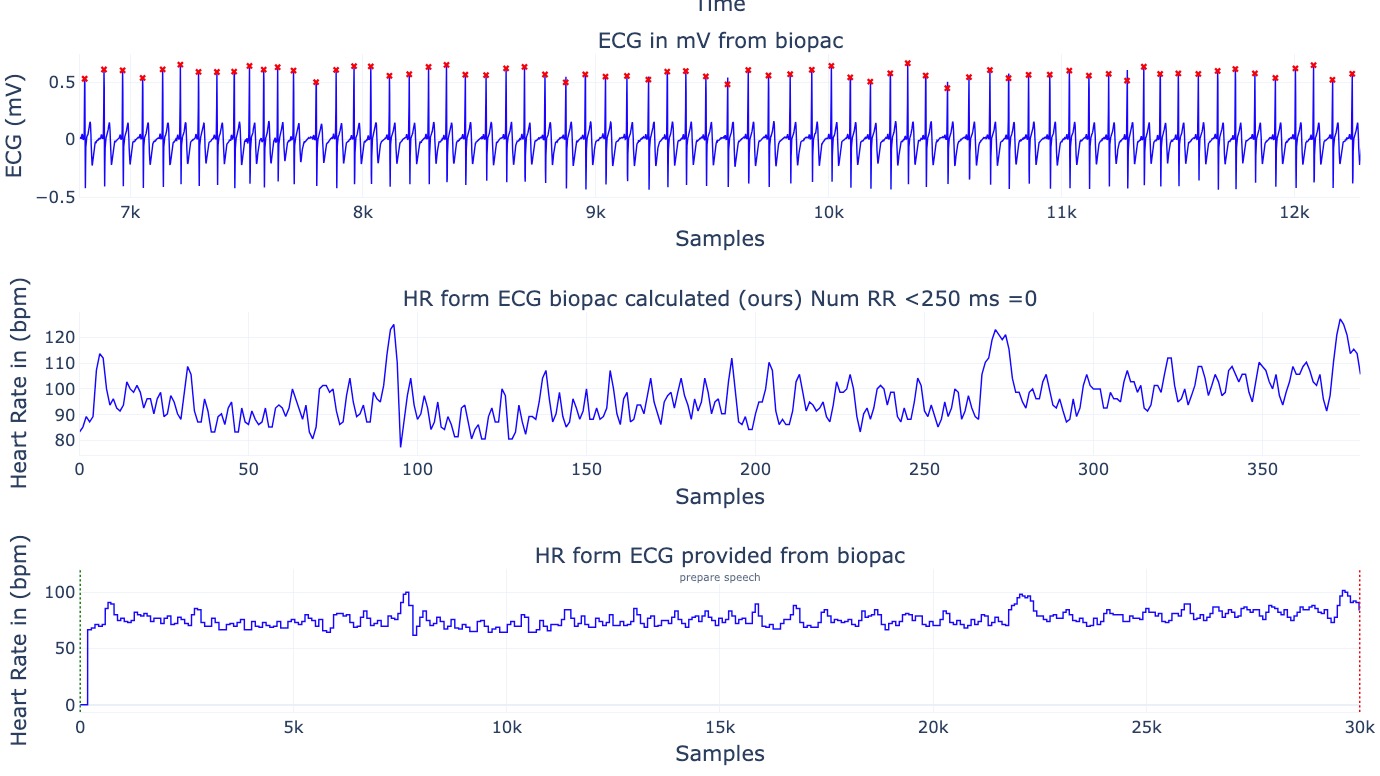
Multi-panel biosignal output: an ECG trace in millivolts with detected R-peaks marked, the heart rate derived from those intervals, and the reference heart rate reported by the acquisition system for comparison.Independent
2025 — present

BiosignalViz

Multimodal biosignal dashboard with agentic pipeline recommendation.

A high-throughput dashboard for visualising multimodal biosignals, incorporating an agentic module that assesses signal quality and recommends an appropriate processing pipeline for artefact removal, filtering and resampling. System scalability and rendering latency were benchmarked against the MIT-BIH Arrhythmia Database.

  • ECG
Benchmark
MIT-BIH Arrhythmia Database
Agent
Signal quality → pipeline selection
Backend
Firebase
Status
In submission

Gemini API · Firebase · Python

News

Recent awards,
talks and features.

  1. 2025

    MindGame featured in Rhody Today

    The University of Rhode Island news office published a feature on the ADHD puzzle-game platform and its wearable data collection.

  2. 2025

    ACM IoT 2025, Vienna

    Presented the MindGame data-reliability study at the 15th International Conference on the Internet of Things.

  3. 2025

    Wearable Biosensing Lab news feature

    Laboratory-wide feature covering digital health research across ADHD, Parkinson's disease and stress monitoring.

  4. 2025

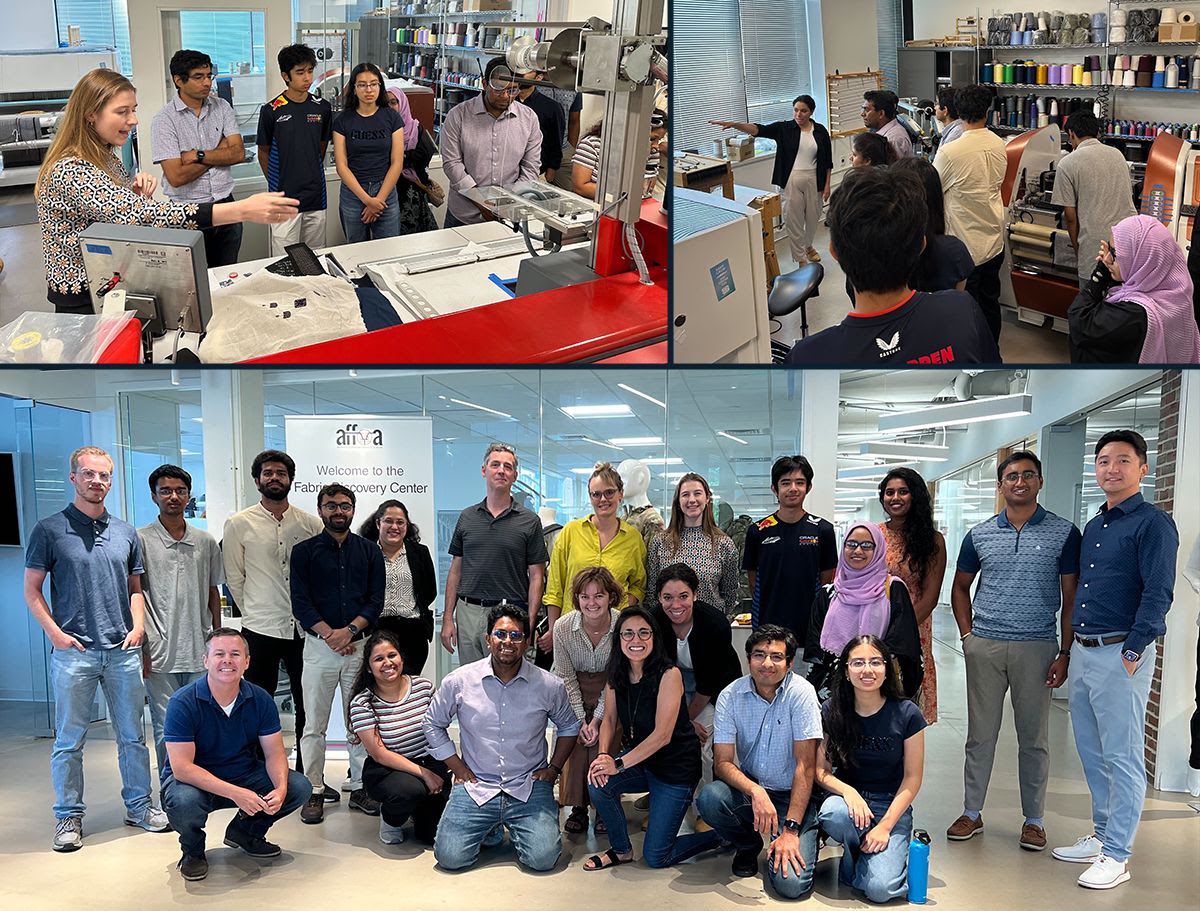
    Industry visit — AFFOA

    Visited Advanced Functional Fabrics of America with the laboratory to review e-textile fabrication processes.

  5. 2024

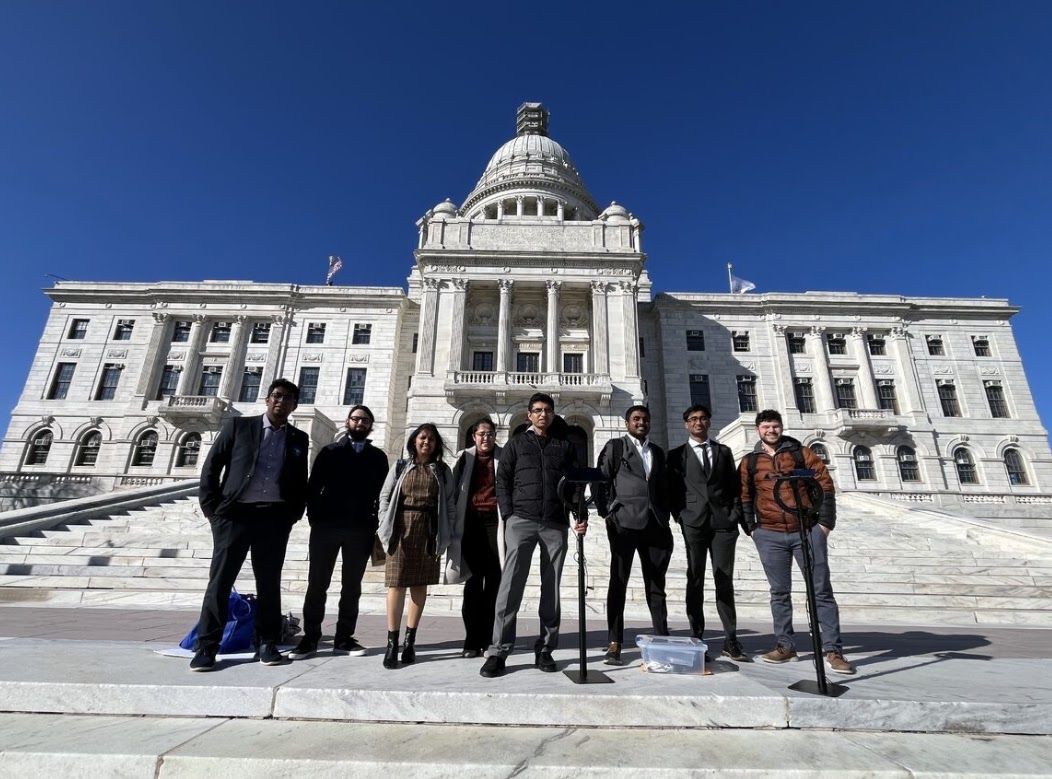
    Invited to the Rhode Island State House

    Presented wearable health research to state legislators alongside the Wearable Biosensing Lab team.

  • The Wearable Biosensing Lab team on the steps of the Rhode Island State House with demonstration equipment.

    Rhode Island State House

  • The laboratory group touring a textile fabrication facility, and a group photograph at the Fabric Discovery Center.

    AFFOA industry visit

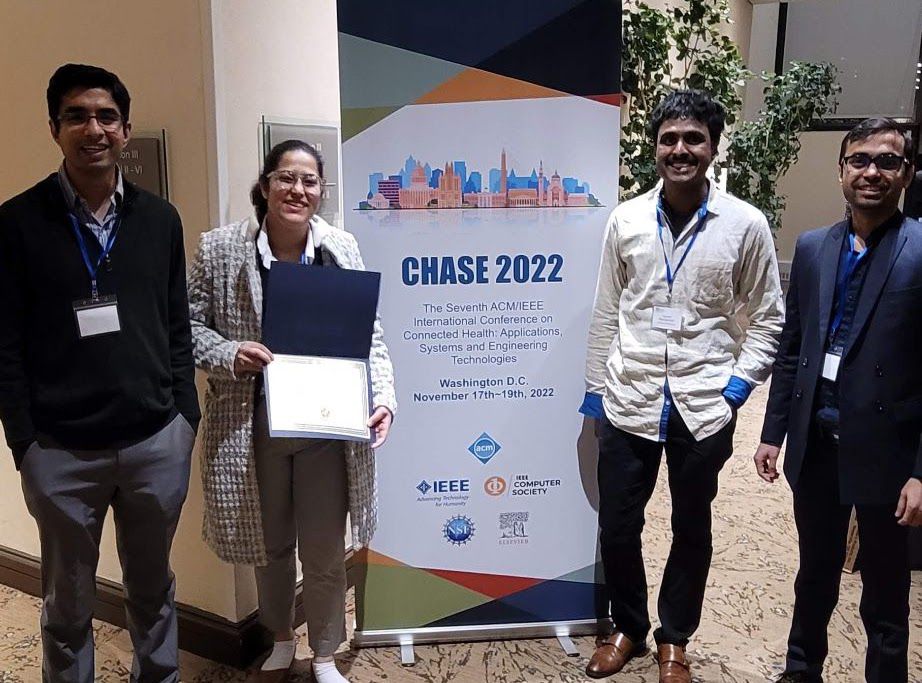
  • Conference presentation at IEEE CHASE 2022.

    IEEE/ACM CHASE 2022

Publications

Peer-reviewed publications.

Google Scholar
  1. 2026Journal

    FidgetSense: Commodity Smartwatch-Based Monitoring of Fidgeting Behaviors in Children with ADHD

    ACM Transactions on Computing for Healthcare

    Sadhu S, Ravichandran V, Bhagat N, Beatty A, Mankodiya K, Weyandt L, Costea G, Solanki D

    Submitted
  2. 2025Conference

    Is wearable data reliable for monitoring behavior? Design of a wearable-based IoMT puzzle game for remote behavior monitoring

    ACM International Conference on the Internet of Things (IoT '25), Vienna

    Sadhu S, Bhagat N, Castillo E, Weyandt L, Mankodiya K, Solanki D

  3. 2026Journal

    CareWear: A multimodal physiological dataset collected via a consumer-based wearable device for stress monitoring

    Under preparation

    Sadhu S, Solanki D, Mankodiya K, Al Rumon MA

  4. 2023Journal

    Designing a Clinician-Centered Wearable Data Dashboard (CarePortal): Participatory Design Study

    JMIR Formative Research

    Sadhu S, Solanki D, Brick LA, Nugent NR, Mankodiya K

    16 cites
  5. 2022Journal

    Towards a telehealth infrastructure supported by machine learning on edge/fog for Parkinson's movement screening

    Smart Health

    Sadhu S, Solanki D, Constant N, Ravichandran V, Cay G, Saikia MJ, Akbar U, Mankodiya K

    16 cites
  6. 2024Conference

    Feasibility of a Digital Health Puzzle Game for Detecting Computer Mouse Behavioral Patterns in ADHD

    IEEE International Conference on Body Sensor Networks (BSN)

    Sadhu S, Castillo E, Weyandt L, Solanki D, Mankodiya K

  7. 2023Conference

    Exploring the Impact of Parkinson's Medication Intake on Motor Exams Performed in-home Using Smart Gloves

    IEEE International Conference on Body Sensor Networks (BSN)

    Sadhu S, Ravichandran V, Constant N, Akbar U, Mankodiya K, Solanki D

  8. 2019Conference

    Motor exercise classification using machine learning

    IEEE MIT Undergraduate Research Technology Conference (URTC)

    Sadhu S, Yerule A, Constant N, Akbar U, Mankodiya K

  9. 2023Journal

    iTex Gloves: Design and In-Home Evaluation of an E-Textile Glove System for Tele-Assessment of Parkinson's Disease

    Sensors

    Ravichandran V, Sadhu S, Convey D, Guerrier S, Chomal S, Dupre AM, Akbar U, Solanki D, Mankodiya K

    31 cites
  10. 2022Journal

    Recent advancement in sleep technologies: A literature review on clinical standards, sensors, apps, and AI methods

    IEEE Access

    Cay G, Ravichandran V, Sadhu S, Zisk AH, Salisbury AL, Solanki D, Mankodiya K

    49 cites
  11. 2023Journal

    Beta Test of a Multicomponent Mobile Health Application for Dementia Caregivers

    Journal of Technology in Behavioral Science

    Chapman KR, Maynard T, Sadhu S, Mankodiya K, Uebelacker L, Davis JD, Ott BR, Tremont G

  12. 2026Journal

    Toward a multimodal model of internalized epilepsy stigma

    Epilepsy & Behavior

    Prieto S, Kiriakopoulos ET, Goldstein A, Kaden S, Tremont G, Mankodiya K, Castillo E, Sadhu S, Solanki D, Davis JD, Margolis SA

  13. 2025Journal

    Stigma intersectionality and its impact on an epilepsy stigma self-management program

    Epilepsy & Behavior

    Prieto S, Kiriakopoulos ET, Goldstein A, Kaden S, Tremont G, Mankodiya K, Castillo E, Sadhu S, Solanki D, Davis JD, Margolis SA

    5 cites
  14. 2025Journal

    Feasibility and acceptability of an online epilepsy stigma self-management program

    Epilepsy & Behavior

    Margolis SA, Prieto S, Goldstein A, Kaden S, Castillo E, Sadhu S, Solanki D, Larracey ET, Tremont G, Mankodiya K, Kiriakopoulos ET

    7 cites
  15. 2024Conference

    Comparative Investigation of Smartwatch Data in Children with ADHD and Non-ADHD

    IEEE International Conference on Body Sensor Networks (BSN)

    Hicking F, Sadhu S, Ravichandran V, Weyandt L, Costea GO, Mankodiya K, Solanki D

  16. 2024Conference

    MedDock: A 3D-Printed Smart Pill Dispenser with Sensitive Textile Sensor for Adherence Monitoring

    IEEE International Conference on Body Sensor Networks (BSN)

    Seckin M, Sadhu S, Al Rumon MA, Gravel M, DiFazio H, Johnson N, Perry K, Solanki D, Mankodiya K

Showing 16 of 16

Awards

Awards and honours.

Recognition from IEEE conferences, national workshops and the University of Rhode Island, spanning undergraduate research through to the doctoral work.

  1. 2025

    Best Demo Award

    IEEE International Conference on Body Sensor Networks, for the armband system and its cloud pipeline.

    Minder
  2. 2025

    Enhancement of Graduate Research Award

    University of Rhode Island, for Samya: a jewellery-like wrist wearable for managing stress in women with polycystic ovary syndrome.

  3. 2024, 2023

    IEEE BSN Student Travel Award

    Awarded on two occasions to attend the IEEE International Conference on Body Sensor Networks.

  4. 2022

    IEEE CHASE Student Travel Award

    International Conference on Connected Health: Applications, Systems and Engineering Technologies.

  5. 2022

    NSF–NIH Smart Health Workshop

    Proposal selected for presentation at the national workshop.

    CareHub
  6. 2022

    Enhancement of Graduate Research Award

    University of Rhode Island, for a smart diet system for polycystic kidney disorder.

  7. 2020

    IEEE CASS COVID-19 Special Student Design Competition

    Third place, for RespDetect: a smart mask for respiratory monitoring.

    RespDetect
  8. 2019

    Undergraduate Research Grant

    University of Rhode Island, for remote homology detection. Principal investigator: Dr Noah Daniels.

Open Source

Datasets and software
released for reuse.

Where participant consent and institutional review permit, study data and platform code are released so that results can be independently verified and extended.

For access to data or code not listed here, please get in touch.

Contact

Open to research collaboration.

I welcome enquiries regarding research positions, collaboration on wearable digital health studies, and access to the datasets and platforms described here.